Just because breathing happens on its own doesn’t mean you’re getting the most out of it.
So why should you care? Because the way you breathe influences your energy, focus, sleep and response to stress — including during hormonal changes.
Start with just 7 minutes today. Build from there.
7 min
to begin
100%
your biochemistry
4-4-8
triangle breath
Calm but Agile
Sharper Focus
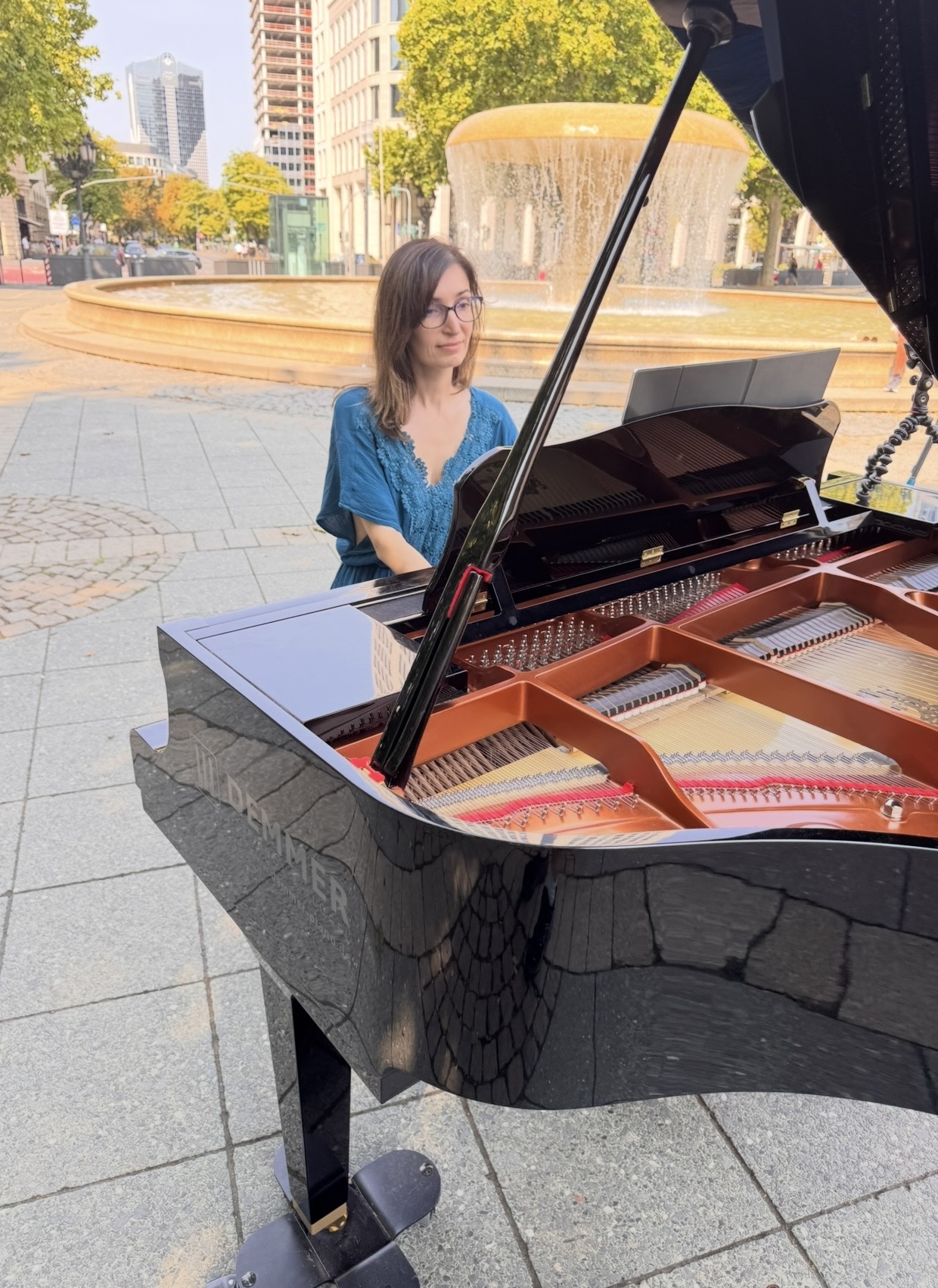
Can classical music help you unwind? Some studies suggest it may also lower cortisol, a hormone involved in stress.
Enjoy beautiful piano music, entertaining biographical stories about composers, and little moments of breath awareness woven naturally between musical pieces.
Discover a connection between musical rhythm and your own breathing — and perhaps experience the music a little more deeply.
Cortisol Reset
Live Musical Harmony
Opernplatz Frankfurt am Main
Triangle Breath Protocol
Inhale (4s) → Exhale (4s) → Hold (8s)
Better breathing isn't one technique. It starts with understanding how you breathe — through your nose, your breathing mechanics, your tolerance to carbon dioxide, your posture and the way you adapt your breathing to different situations.
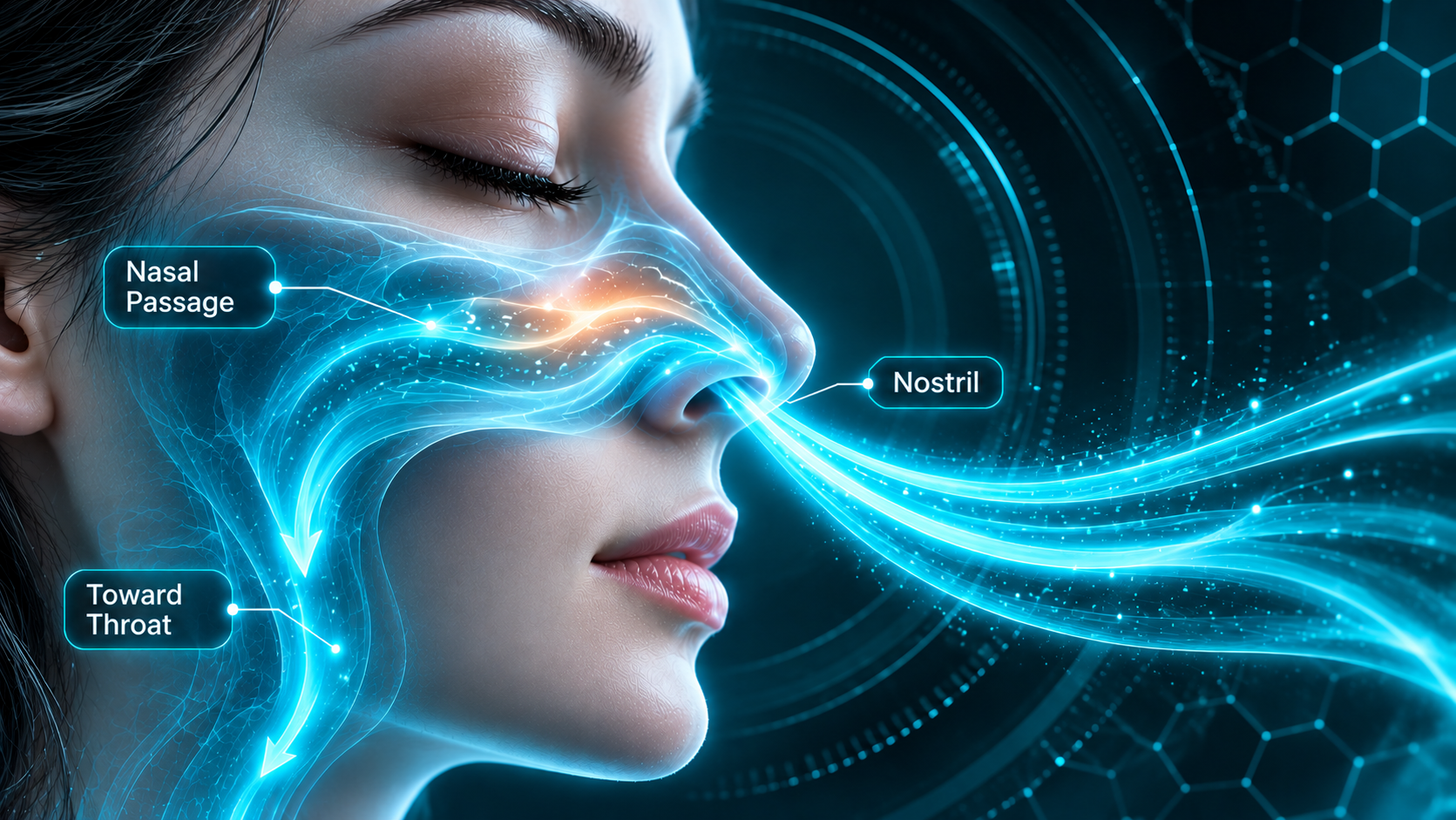
Filters and humidifies inhaled air while producing nitric oxide (NO), supporting pulmonary blood flow and more efficient oxygen (O2) exchange.
Encourages coordinated diaphragm and rib cage movement, helping reduce chest, neck and abdominal tension.
Oxygen supports your body’s energy production.
Building tolerance to rising carbon dioxide (CO₂) levels supports calmer breathing and greater comfort under stress.
Supports rib cage movement and comfortable diaphragmatic expansion.
Adjusting breathing rhythms dynamically for different daily situations.
Carbon dioxide helps regulate breathing and facilitates oxygen release to your tissues and organs.
Rest the broad surface of your tongue gently against your upper palate, with the tongue tip just behind your upper front teeth. Keep your jaw relaxed, without pressing or straining.
Important: The instruction refers to the broad surface of the tongue resting against the palate, not just the tip touching behind the teeth.
Please note: If nasal breathing is consistently difficult or uncomfortable, seek medical advice. Breathing exercises should always be adapted to your individual needs and comfort.
“No matter what you eat, how much you exercise, how skinny or young or wise you are, none of it matters if you're not breathing properly.”— James Nestor, Breath: The New Science of a Lost Art
Different lives, different goals. Breathing is not one-size-fits-all.
You feel tense, overwhelmed or anxious and want to handle everyday pressure with more ease.
You struggle to fall asleep, wake during the night, snore or rarely feel truly rested. You may also have concerns about sleep apnea and want to better understand your breathing habits.
You experience fatigue, brain fog or difficulty concentrating throughout the day.
You're navigating perimenopause, menopause, andropause or other hormonal shifts and want to support your wellbeing.
You want to explore how breathing actively supports movement, endurance, performance and recovery, and how it relates to measures such as HRV and VO₂ max.
You've tried breathing exercises or scrolled through social media, but you're unsure which techniques suit you or how to make them an easy part of daily life.
You struggle with pollen allergies, a persistently stuffy nose, a deviated septum, mouth breathing or asthma, and want to better understand your breathing.
Breath coaching is educational and can complement medical care. It does not replace medical assessment or prescribed treatment.
Efficient breathing isn’t about taking bigger breaths. Slightly modified breathing coordinated with diaphragm and rib cage movement reduces unnecessary breathing effort, waste of your energy, and supports efficient ventilation.
Subscribe to the newsletter for breathing science, practical guidance and updates — without the hype.
Like the foundation of a house, your breathing is easy to overlook — yet it supports how you move, rest, focus and respond.
Deeper and bigger breaths aren't automatically better. Breathing patterns and context matter.
Everyday habits, nasal comfort and breathing mechanics all play a part.
Oxygen and carbon dioxide have different, essential roles in breathing physiology.
Three deep breaths may change how you feel for a moment. Lasting habits take understanding, appropriate practice and time. Some useful techniques can feel counterintuitive — which is why a little physiology matters.
“Breathe deeply”, “breathe slowly” or “always breathe through your nose” can be tii simplicstic. Advice that ignores your health, activity and individual breathing patterns can be misleading, even when it goes viral.
Apps, devices and peak breathing experiences can be useful tools. They should not replace knowledge how your breath works and adapts to your body and life situations.
Use technology, never depend on it.
“For one year, Mila guided yoga and breathing exercises at our FRAtax office in Frankfurt. These shared breaks did us good. We were able to switch off, recharge and become more aware of our bodies. Simple exercises and tips we could use in everyday life were especially valuable. We learned how to use our breathing consciously to find calm, even in stressful moments.”
“I have never been a fan of creating habits, but after a few sessions with Mila, I noticed how my body started asking for breathing practice because I felt so good afterwards. Today, after six months, I can say the results are amazing! Highly recommend! Thank you so much, Mila, for helping me create this habit!”
“I completed a four-week better breathing programme focused on improving oxygenation, increasing CO₂ tolerance and calming the nervous system. Mila explains the practices clearly and with great awareness, making them easy to integrate into everyday life. This programme is a natural and effective way to support health, reduce stress and improve focus, physical performance and sleep. Highly recommended!”
“Great breathing practices with Mila’s guidance! As a former highly ranked fencing athlete, I recognise the importance of being fast but focused, and correct breathing exercises can facilitate that!”
“At first, I was doubtful because I had never practised breathing techniques before. After 12 years using a CPAP machine for sleep apnea, I found these exercises too demanding. Mila is a very professional coach. She helped me gradually understand each exercise, which I now practise even while gardening. I’m beginning to feel the benefits and hope that, in time, I may gradually reduce my reliance on the device. Thank you, Mila, for your excellent teaching!”
“I managed the vagus nerve stimulation – Ocean Sound, immediately and incorporated it into breathing exercises. Mila explains exercises very well, step by step. I really like the balanced water breath 4/4. Breathing practice is relaxing; it’s like a short meditation for your body and mind. Go for it!”
Whether you're interested in personal coaching, a group session, a corporate programme or a piano event, we can start with a conversation.
Book a free 15-minute call to discuss what you're looking for and which Breathia offering may suit you.